

Understanding Your Village
Children need other people in their lives beyond their immediate family members. We were never meant to do this alone.

You’re standing at the school gates again. Another issue for your child. Another meeting where they tell you your child doesn’t fit. Another night where you lie awake trying to figure out what you’re doing wrong, how you can fix this, why you can’t seem to get it right.
You’re carrying everything. Every emotional regulation. Every social skill. Every moment of belonging. Every lesson about who they are and why they matter.
And you think this is your job. Just yours and, perhaps, your partner’s.
The Armful
For every parcel I stoop down to seize
I lose some other off my arms and knees,
And the whole pile is slipping, bottles, buns,
Extremes too hard to comprehend at once
Yet nothing I should care to leave behind.
With all I have to hold with—hand and mind
And heart, if need be, I will do my best.
To keep their building balanced at my breast.
I crouch down to prevent them as they fall;
Then sit down in the middle of them all.
I had to drop the armful in the road
And try to stack them in a better load.
by Robert Frost
Carrying all the weight
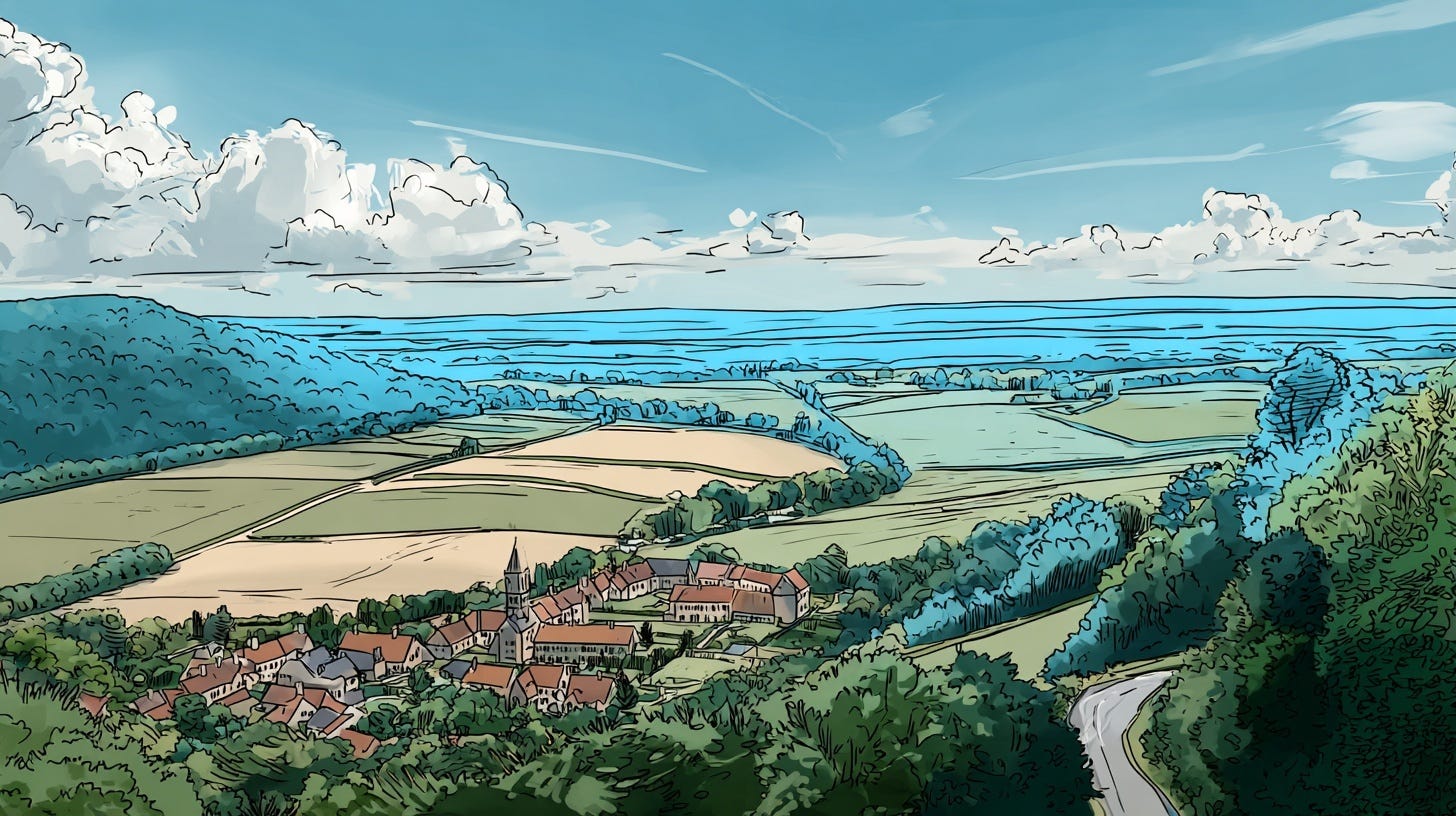
I carried this weight for years. In Maidenhead, then in Devon, in the village in the picture above. Every morning, every evening, every school holiday. I was the one who had to make sure all three of my children felt seen, valued and understood. The one who had to counteract the messages they received at school: that they were too much, too difficult, too different. The one who had to rebuild their sense of self each time systems dismantled it.
My children’s father caused chaos rather than stability. My parents refused to be a hands-on grandparents from the start. There were no other grandparents. My brother lived a few doors away from us and he would shout, “Go away, children from hell!” when they knocked on his door. He meant it as a joke. It wasn’t funny.
I did have friends. Jane welcomed my three along with her three despite the ensuing chaos. And there were others too. But friends who have their own families weren’t enough to share the weight.
Finding a Better Village
When I moved 200 miles to Devon with three young children we found stronger community—a better village. Friends who showed up. Work colleagues who got it. A village school for two of my three children run, at first, by teachers who loved children.
We literally found a village. But it could have been a town, a region. Or better: I could have worked out how to create a better village for my little family right where we already were.
I moved area mainly in order for Sam to attend a libertarian school that appeared to welcome him and our family. This only lasted one term. Our village school subsequently lasted two days before it was clear they couldn’t let him stay.
But I also had a place at university to study to become a maths teacher myself and be able to provide for my family. And, for me, it seemed to make sense to put some miles between us and our previous town. I have frequently questioned the wisdom of this since.
Some of the other parents at the village school and some of our neighbours absolutely saw Sam’s experience of belonging as their concern.
Others did not. They judged him and saw him as someone to protect themselves from. A new headteacher arrived in the village school and he warned my daughter, “You don’t want to turn out like your brother.”
Here’s what I have learned: Village is more than neighbourhood and personal friends. Village includes the local community, the schools, the systems that should be holding our children.
I’d found village in friendships and daily life. But the schools, which should have been a vital part of our village, kept failing Sam. The professionals and also many of the other parents simply stepped back and left everything to me. And the village is not good enough when more than one essential part refuses to show up.
What Village Actually Means
In the past, children were raised by many people. Extended family were usually local and involved. Neighbours who knew everyone’s names. Elders. Older children helping younger ones. A whole community who would notice if a child was struggling.
I remember my childhood in the 1960s. Freedom to roam between gardens and houses. Roller-skating and riding our bikes in the road. I knew many families there and we spent our time in and out of each others houses
My friend Fiona’s mum Hazel invited me in for tea when Fiona wasn’t home. I’d never drunk tea before and it was horrible, but I sat there with Hazel and another neighbour, struggling through that bitter drink in its green china tea cup, feeling held by something larger than just my own family.
That was an aspect of village.
Now? Most parents are geographically isolated. Grandparents live hours away or sometimes refuse the role even if they are near. Neighbours are frequently strangers. Schools that our children attend are not necessarily the most local schools. School drop-off happens in cars. Parents aren’t involved. The structures that used to create village have been systematically dismantled.
We’re trying to do with two or three people what used to be done by many more. It’s not working because it can’t work.
“The Mother” by Brandi Carlile. It’s raw and honest about the weight of motherhood, the vulnerability of it, the fierce love and the exhaustion.
Mapping Your Village
Before you can tend your village, you need to see it. Most of us can’t see the flows of support and care (or the lack of them). We think about individual relationships but we don’t think about the whole system.
It might work for you to make it visible.
❤ Please make sure you have access to support for yourself as this can be an emotionally challenging activity.
1. Get your materials
You need a piece of paper and coloured pens or pencils, if you have them.
2. Draw three circles, one inside the other
In the innermost circle: Write your child’s name (or yours) in the very centre. Then write the names of immediate family and close friends. The people who are closest. The people your child knows well and sees in their everyday life.
Now draw another circle around them: Here, write the names of neighbours, other friends, teachers, coaches, therapists, health or social workers. Anyone who knows your child well and sees them regularly. Place them nearer to the first circle or further away depending on how close the relationship feels.
Now a third circle: Here, write the names of people who should be closer but aren’t. New partners when parents divorce. Extended family who’ve chosen distance. People whose absence or difficult behaviour affects your child’s life.
3. Use colour to see patterns
One colour for family
Another for friends.
Another for professionals.
Another for those who should be present but aren’t.
Another for those who have died, whichever circle they belong in.
4. Include everyone
Even difficult people. Mark them however makes sense (a different symbol, a line through the name, whatever helps you see clearly):
Family members (even those who’ve refused the role)
The children’s other parent (even if causing chaos)
New partners of ex-partners
Friends (including those you’ve lost touch with)
Professionals (teachers, therapists, coaches)
Neighbours, shopkeepers, anyone with regular contact or everyone without contact.
Those who have died (place them in whichever circle reflects how close they were, how present they still feel)
5. Sit with what you’re seeing
Don’t judge yet. Just see clearly.
Notice:
How many names are in each circle?
Is the inner circle very small, or surprisingly full?
How many people in the second circle actually do see your child regularly?
Who’s outside the third circle who should be much closer?
What about institutions (schools, clubs)? Where do they sit?
This shows you your starting point. Not where you’ll always be. Just where you are now.
What Your Map Might Show You
When I did this as a young mother, my map showed almost everything flowing through me. I was the hub. The bottleneck. The single point of failure. And the single point of success.
Jane was there, precious and essential. A few other friends with their own children. But it wasn’t enough.
Later in Devon, my map looked different. More support. But for Sam, isolation. Schools failing. His father, Danny’s girlfriends and wives working against us rather than helping.
You might see one or more of these patterns:
The Isolated Pattern: Everything flows through you. You’re exhausted, overwhelmed, and you feel irreplaceable. Just you and your child(ren), circling each other.
The Professional Pattern: Most of the support is from paid services. Vital, but we need more than this.
The Refused Village Pattern: People who should be in the inner circle (grandparents, the other parent) have said no or are absent.
The Harmful Village Pattern: People who should support are destabilising. The other parent causes chaos. New partners interfere. Extended family fails to engage with the children.
The Missing Child Pattern: Support flowing to you, but little directly to your child. No peers who welcome them, no adults outside family who see them.
The Failed Systems Pattern: Community support exists, but institutions keep failing. The informal village works, but formal systems don’t.
All reveal the same truth: we need a village made up of many members in order for our children to thrive and for us to survive.
And it can be so painful.
From Sole Responsibility to Ecosystem Thinking
When you can see the system, something can shift:
The guilt lifts. You’re not failing. No one person can be everything. The question instead becomes: “What does this ecosystem need to become healthier?”
You see possibilities. “My child has one friend who gets them. That’s a thread to tend.” Or: “The librarian remembers what books they loved. Could we visit more regularly?”
Your needs matter. If you collapse, the system suffers. Your need for support isn’t selfish. It’s essential ecosystem maintenance.
You see what’s missing or harmful. “This person is destabilising us. That’s an unhelpful element I need to protect us from.” Or: “This person makes things harder. I can stop expecting her to help.”
You ask for help clearly. Not vague “I need help” but specific: “I need someone to take my child to football on Wednesdays.”
You create intentionally. “My child has no peers. What about starting a games group?” Or: “We have no grandparents around. Could we connect with a befriending programme?”
Tending Your Ecosystem
Be realistic about constraints. You can’t magically create supportive family if yours is absent or harmful in some way. You can’t change the other parent. Some things are outside your control.
But.
Look for small additions. One new connection can change the system. When I organised Circles of Friends for isolated students as a teacher, we asked for six volunteers from their classmates. Sometimes we got twenty-five. The generosity was there once we created structure to channel it.
Tend what exists. That one good friendship your child has? Protect it. That teacher who sees them clearly? Acknowledge them. You’re strengthening the ecosystem.
Create boundaries around harm. If the other parent is abusive, seek legal protection. If their new partners interfere, seek professional support. If extended family causes more harm than help, limit contact. Protecting the ecosystem sometimes means keeping toxic elements from poisoning the whole system. And yet this is not straightforward as children do need both their parents. (Occasionally this is not so, of course.)
Create reciprocity where you can. What can you offer back? Not from obligation, but genuine desire to contribute? Show up to school events. Say thank you specifically. Be village for another struggling family.
Accept imperfection. Your ecosystem will have gaps, weak points, flows that aren’t quite right. People who should be there won’t be. That’s OK. A forest isn’t perfect either. It just needs to be healthy enough to sustain life.
The Invitation
You are not your child’s entire world, and you were never meant to be. You are part of an ecosystem that should be holding both of you.
Right now, that ecosystem might be sparse, fragile, barely functioning. Some people who should be there have refused. Some cause harm. Some systems don’t work.
That’s not your personal failure.
But once you can see the system, you can begin to tend it. To notice what’s there. To protect from harm. To create small connections that might grow. To release the crushing weight of sole responsibility.
Your map might be sparse right now. That’s where you start. Not where you’ll always be.
You’re teaching your children about village by trying to create one, even when people refuse to show up, even when systems fail, even when you have far less support than any parent should need.
That’s profound work. And you don’t have to do it alone, even though sometimes it feels as if you do.
If this resonates, I’d love to see your village maps, or hear about what you discovered making them.
Maybe, reply to this email or leave a comment sharing one thing you noticed: a gap you hadn’t seen, a connection you’d overlooked, someone who refused or caused harm that you’d been trying to fix instead of accepting.
Warmest wishes to you all and thank you for listening.
This topic is so hard … and yet so vital for us. I love the clarity that your circle exercise brings!
We have been struggling hugely as a family with differently wired children and adults to build … and build again … and rebuild that village. The most difficult learnings for me were:
- the global mobility that many large multinational corporations expect from their employees can scar and destabilize you badly. Being required to move every two to three to a new country, often even a new continent just so that breadwinners can keep their job is often putting children and the whole family in a really terrible position, especially when special needs in terms of education, therapy and/or health exist
- sometimes, you have to make really difficult choices and tradeoffs as parents. Right now, my husband is commuting and working during the week in a different town three hours away - which means our children are seeing him only on the weekends, but are growing up in a stable supportive community where my parents live. It’s not a perfect decision, but all in all working better than uprooting every couple of years.
- some places make it much harder, if not outright impossible for you to build up your village. This happened to us when we moved to a place where our kids were bullied just because of their nationality, upbringing and accents. We tend to think the whole world has become so globalized that everyone is welcome everywhere - but sadly that is not the case …
It’s difficult when you have a young adult who rarely leaves the house and who refuses to speak to most other adults. But I’m working on it, small baby steps but all I can do is try!